Cybersecurity threats are increasing at an unprecedented rate. As organizations continue adopting cloud platforms, remote work environments, SaaS applications, and digital transformation initiatives, securing user identities and data has become one of the most critical priorities for enterprise security teams.
Today, a compromised identity is often the starting point of a cyberattack. Unauthorized access can lead to data breaches, ransomware incidents, compliance violations, and financial losses.
This is why Enterprise Cloud Security Software has become one of the most important technology investments for businesses operating in 2026.
What Is Enterprise Cloud Security Software?
Enterprise Cloud Security Software is a comprehensive cybersecurity platform designed to protect cloud-based applications, infrastructure, data, and users.
These platforms help organizations secure cloud applications, enterprise networks, customer databases, SaaS platforms, remote employees, hybrid work environments, and corporate devices. Modern cloud security solutions combine artificial intelligence, security analytics, compliance automation, and identity management to create a centralized security ecosystem.
Why Hybrid Workforces Need Cloud Security
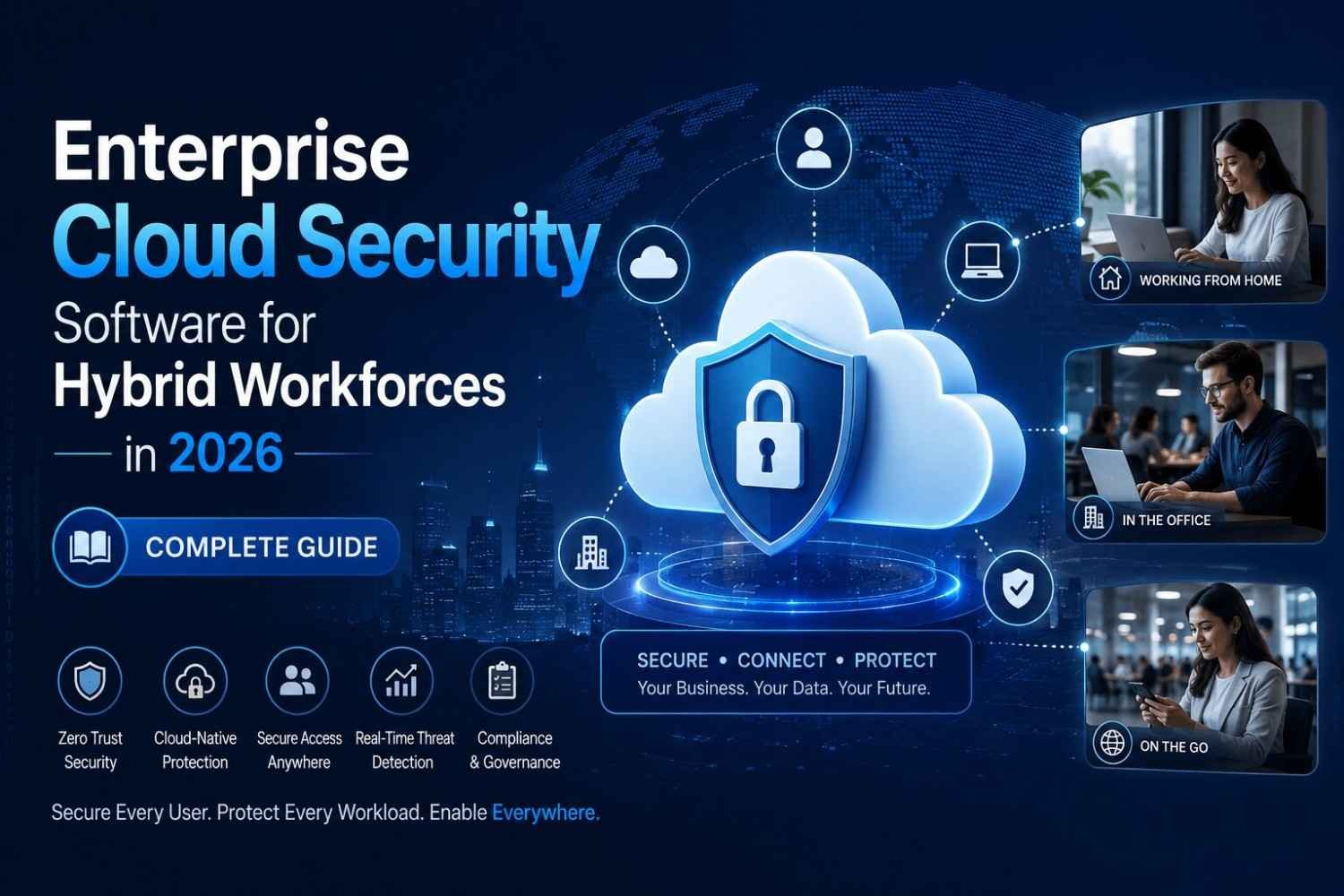
The rise of hybrid work has significantly expanded the attack surface for organizations. Employees frequently access systems using personal devices, mobile phones, home networks, public Wi-Fi connections, and cloud applications. Without proper security controls, organizations face risks such as data breaches, ransomware attacks, account compromise, insider threats, compliance violations, and unauthorized access.
Key Benefits of Enterprise Cloud Security Software
1. Enhanced Data Protection
Protects customer information, financial records, intellectual property, operational data, and employee records through advanced encryption and access controls.
2. Improved Compliance Management
Helps maintain compliance with GDPR, ISO 27001, SOC 2, HIPAA, PCI DSS, and other standards through automated monitoring and reporting.
3. Better Visibility Across Cloud Environments
Provides centralized visibility into user activity, security events, access permissions, application usage, and risk exposure.
4. Reduced Cybersecurity Risks
Includes threat detection, security monitoring, risk assessment, vulnerability management, and incident response capabilities.
Core Features of Enterprise Cloud Security Software
Cloud Access Security Broker (CASB)
Acts as a security layer between users and cloud applications with access control, data loss prevention, threat protection, and compliance enforcement.
Identity and Access Management (IAM)
Controls user access through authentication, policy enforcement, permission management, and multi-factor authentication.
Zero Trust Security
Operates on the principle “Never Trust, Always Verify,” continuously validating users and devices before granting access.
AI and Machine Learning in Cloud Security
AI-powered Cloud Security Software can detect anomalies, identify suspicious behavior, predict attack patterns, automate investigations, and improve threat intelligence.
Cloud Security Trends for 2026
- AI-Powered Threat Detection
- Zero Trust Adoption
- Security Automation Growth
- Cloud Compliance Expansion
- Multi-Cloud Security
Frequently Asked Questions
What is Enterprise Cloud Security Software?
Enterprise Cloud Security Software protects cloud applications, infrastructure, users, and data through advanced cybersecurity technologies.
Why is cloud security important for hybrid workforces?
Hybrid work environments increase cybersecurity risks by expanding access points and user locations.
What is Zero Trust Security?
Zero Trust is a security framework that continuously verifies users and devices before granting access.
Conclusion
Enterprise Cloud Security Software has become a mission-critical technology for organizations operating hybrid workforces in 2026.
By combining cloud security, cybersecurity automation, compliance management, identity and access management, zero trust security, and artificial intelligence, modern platforms help organizations protect their most valuable digital assets.
As cyber threats continue evolving, businesses that invest in robust cloud security solutions will be better positioned to maintain compliance, reduce risks, and support long-term growth.